The holiday season is often envisioned as a time filled with twinkling lights and warm moments, but for couples experiencing tension in their relationship, it can feel overwhelming. I’ve witnessed this struggle many times with couples, including those who seek out support. December has a unique way of intensifying existing wounds.
A significant part of the problem lies in our expectations. We tend to idealize the holidays based on cinematic portrayals that promise picture-perfect meals, families, and memories. In reality, we have to deal with budget constraints, complex family dynamics, unresolved childhood issues, and packed schedules. It’s no surprise that such pressure can overwhelm anyone.
You might find yourself questioning why simple tasks like hanging up decorations or deciding on visiting family can lead to intense conflicts.
However, there’s a reassuring truth: with open conversations and healthy boundaries, it’s possible to navigate this season without drifting apart. Surprisingly, you could even emerge from it stronger than before.
Here are six suggestions to help you stay connected during the holidays:
6 Strategies to Stay Connected During the Holidays
1. Embrace “good enough” over “perfect”
Let go of the idealized vision. Real-life holidays can be chaotic, and that’s completely fine. Together, determine what “good enough” means for you this year—perhaps opting for simpler meals, fewer events, and avoiding the rush. When you stop pursuing the perfect holiday, you both can breathe easier.
2. Cultivate daily moments of connection
You don’t need a lot of time; even ten minutes will do, free from distractions. Whether it’s sharing coffee in the morning, taking a brief walk after dinner, or having a quiet moment together at bedtime, these small rituals help maintain emotional stability.
Try suggesting something simple: “Can we dedicate 10 minutes tonight to ourselves, without any phones? I want to feel close to you during this hectic time.”
3. Create a budget agreement
Financial stress often escalates during the holidays. Together, choose a spending limit for gifts, travel, and extras, and commit to it. Going overboard in an attempt to “make the season special” can backfire. Instead, prioritize making memories together—maybe a stroll to admire local lights or a cozy movie night will mean more than any purchased gift.
You could say, “Let’s establish a budget that works for both of us, and then plan one simple, enjoyable activity.”
4. Share calendar responsibilities
You’re not obligated to attend every event as a couple. Decide what activities you both enjoy, which ones one of you can attend alone, and what can be skipped. Preserving your energy is crucial for maintaining your connection.
5. Agree on a time-out signal
Disagreements are inevitable, especially with family involved and stress levels high. Establish an agreed-upon method for pausing when tensions escalate. A few moments outdoors or a quiet moment later can save you from unnecessary conflict.
A gentle approach can work wonders: “I care about you, and this is important. Can we take a five-minute break outside to avoid saying something we might regret?”
6. Create loving boundaries with family
This can be challenging for many couples, but remember that you’re not obligated to fulfill every expectation set by others. Boundaries are protective, not rejecting. You can choose to arrive late, leave early, alternate years, or establish a new tradition just for the two of you.
For example: “We’re looking forward to seeing everyone, but we’ll be there from three to six. This timeframe helps us keep our day peaceful.”
The holidays tend to amplify what’s already present in your relationship. A little consistency, some thoughtful planning, and a few loving boundaries can transform a stressful season into one where you support each other, rather than pull apart.
Author Bio

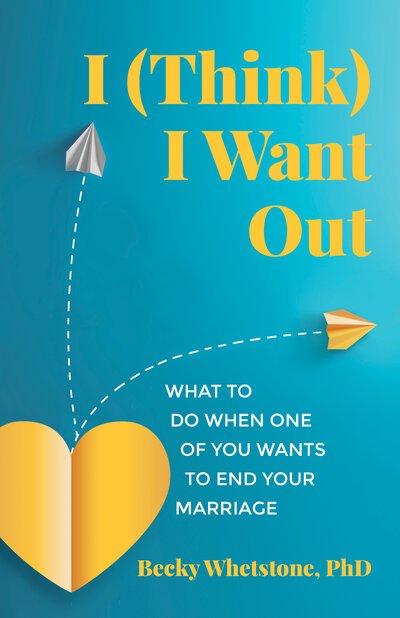
Becky Whetstone, PhD, is a marriage and family therapist and life coach specializing in helping couples navigate crises with clarity and stability. She is the creator of the Two Month Marriage Crisis Program and the author of I (Think) I Want Out: What To Do When One Of You Wants To End Your Marriage. Discover more about her work and book here.