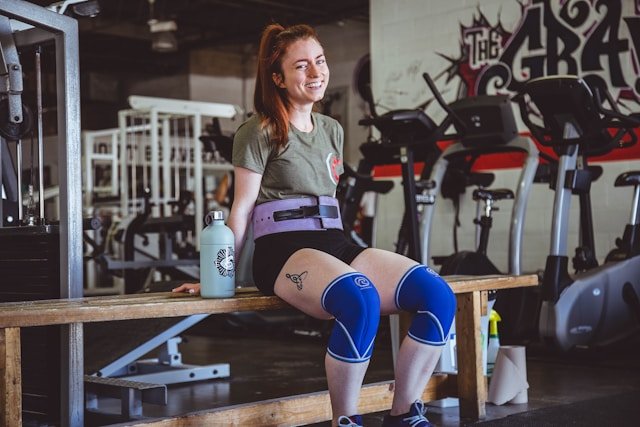
The topic of strength training equipment often generates differing opinions, with the gym belt being a significant point of contention. Many lifters fasten their belts securely before each set, while others argue that relying too heavily on such external support can hinder genuine physical progress. To effectively integrate a gym belt into your training regimen, it’s crucial to grasp its functions and applications.
Understanding the Purpose of Gym Belts
Fundamentally, gym belts act as stabilizing tools. They enhance intra-abdominal pressure, providing support to the spine, which can bolster performance and reduce the risk of injury during heavy lifts. For athletes aiming for personal records in exercises like squats, deadlifts, or overhead presses, this added stability can be invaluable. However, it’s important to note that they aren’t a cure-all. Belts cannot substitute for strong core muscles or correct improper form; they are merely tools meant for specific situations.
When to Use a Gym Belt
Gym belts are most advantageous during exercises that place significant strain on the spine, particularly when nearing maximal loads. Activities like deep barbell squats and heavy deadlifts typically fall into this category. When lifting around 85-90% of your one-rep max, a belt can provide an extra layer of security, boosting your confidence while lifting.
For those focused on low-rep sets with heavy weights, a belt can serve as an essential safeguard, helping to bolster the core’s natural bracing response, especially as fatigue sets in. This is why many Olympic lifters and powerlifters strategically incorporate belts into their training regimens.
When to Leave the Belt in the Gym Bag
Not every exercise or lifter needs a belt. For athletes prioritizing foundational core strength, depending too much on a belt can be counterproductive. Movements such as goblet squats, lunges, kettlebell swings, or planks are more effective when allowing the core to engage without additional support.
If you’re working with moderate weights—generally below 70% of your one-rep max—using a belt is usually unnecessary. Training without a belt in these ranges encourages your core to stabilize your body naturally, fostering balanced development and promoting long-term strength gains.
The Importance of Core Development without Support
Relying too much on gym belts can weaken the muscles essential for stabilizing your spine and pelvis. It’s vital to focus on strengthening your transverse abdominis, obliques, and multifidus, as these muscles work together to ensure stability, protect the spine, and generate power. By leaving the belt off during warm-ups, accessory lifts, and core workouts, you foster comprehensive development in these areas.
Proper Usage of a Gym Belt
If you choose to add a belt to your routine, correct usage is key. Position the belt around your midsection, covering the area between your ribs and hips. It should fit snugly, but not so tightly that you can’t take a deep breath. The goal is to press your abdominal wall against the belt, creating pressure through diaphragmatic breathing and bracing, rather than tightening it to discomfort.
Common Mistakes to Avoid
Using a belt for every set, even during lighter lifts, diminishes its intended effectiveness. It’s also a mistake to view the belt as a replacement for proper technique. Without a solid understanding of correct bracing mechanics, the belt may end up as a crutch rather than a tool for enhanced performance.
Is a Gym Belt Right for You?
Think about your training objectives when deciding to incorporate a belt into your routine. If your goals align with absolute strength or powerlifting, a belt could be a key asset for your heaviest lifts. Conversely, if you are pursuing athletic performance, mobility, or functional fitness, emphasizing raw core strength may take precedence.
Final Thoughts
Gym belts are not inherently good or bad; their effectiveness is determined by how and when they are utilized. Approach their use with understanding, apply them purposefully, and they can help you achieve your training goals. However, they should never replace the principles of strong and intentional movement.