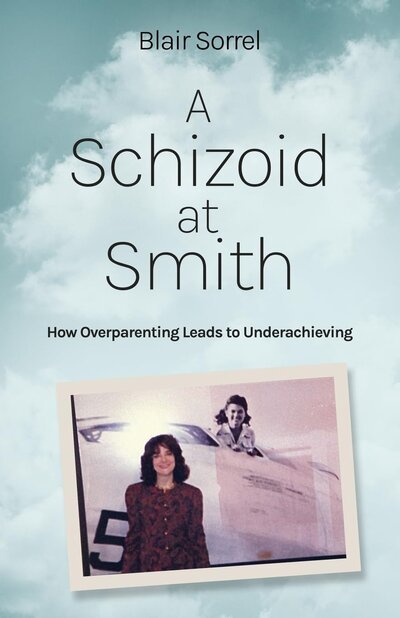
A review of Schizoid at Smith: How Overparenting Leads to Underachieving by Blair Sorrel.
Blair Sorrel’s memoir is both a striking insight and a cautionary tale. In A Schizoid at Smith, the author provides an unvarnished portrayal of her experience with schizoid personality disorder—an often neglected topic that renders its sufferers largely unacknowledged in society. Unlike traditional memoirs, Sorrel emphasizes survival over triumph and the burden of underachievement instead of accolades, despite her attendance at the esteemed Smith College. Her literary finesse turns what might be a dry clinical case into an evocative narrative filled with themes of isolation, misunderstanding, and ultimately, self-discovery.
Some of the most poignant sections of the book delve into the origins of Sorrel’s condition, grounded in severe overparenting. Her mother, a WAAC nurse during WWII, enforced strict routines that encompassed excessive hygiene practices, rigid social standards, and emotional restraint, leaving young Blair ill-equipped for forming genuine connections. Sorrel deftly portrays how well-meaning, but extreme parental control, can severely hinder a child’s ability to navigate social interactions. These early chapters unfold like psychological horror, revealing how a sensitive child’s natural growth is systematically thwarted by the very person tasked with nurturing them.
The significance of this memoir lies in its rarity. Schizoid personality disorder predominantly affects men, and those affected rarely seek treatment; thus, Sorrel’s decision to share her journey is an act of remarkable courage. She offers vital perspectives into the lived experience of emotional detachment, the challenges of sustaining employment, and the profound loneliness that accompanies the feeling of being an observer in a world that seems to pass by without one. Her diagnosis in 1988 by clinician Selma Landisberg marks a pivotal moment—not towards a cure, but towards comprehension. The clinical adjectives “desire to be alone, difficulty expressing emotions, trouble holding jobs” begin to provide context for decades of confusion and struggle.
Sorrel writes with extraordinary self-awareness and literary flair, using vivid descriptions and cultural references that elevate the story beyond simple confession. Her reflections on the era of the 1960s and 70s at Smith College, the expectations of educated women, and the disparity between promise and reality resonate broadly. The juxtaposition of her prestigious Smith background against her later experience of “marginal subsistence” serves as a thoughtful meditation on how mental illness disregards both privilege and potential. Her writing is infused with both humor and depth, steering clear of self-pity while nonetheless recognizing authentic suffering.
This memoir appeals to a diverse audience: individuals battling their own social withdrawal, therapists seeking clarity on this elusive condition, families dealing with the consequences of overcontrol, and anyone interested in the intricate dynamics between parenting and mental health. Sorrel successfully achieves her aim of illuminating an often misunderstood condition while instilling hope that understanding, if not healing, is within reach. A Schizoid at Smith is an invaluable addition to the discourse on mental illness, distinguished by its honesty, lucidity, and ultimate theme of human resilience amidst unseen challenges.