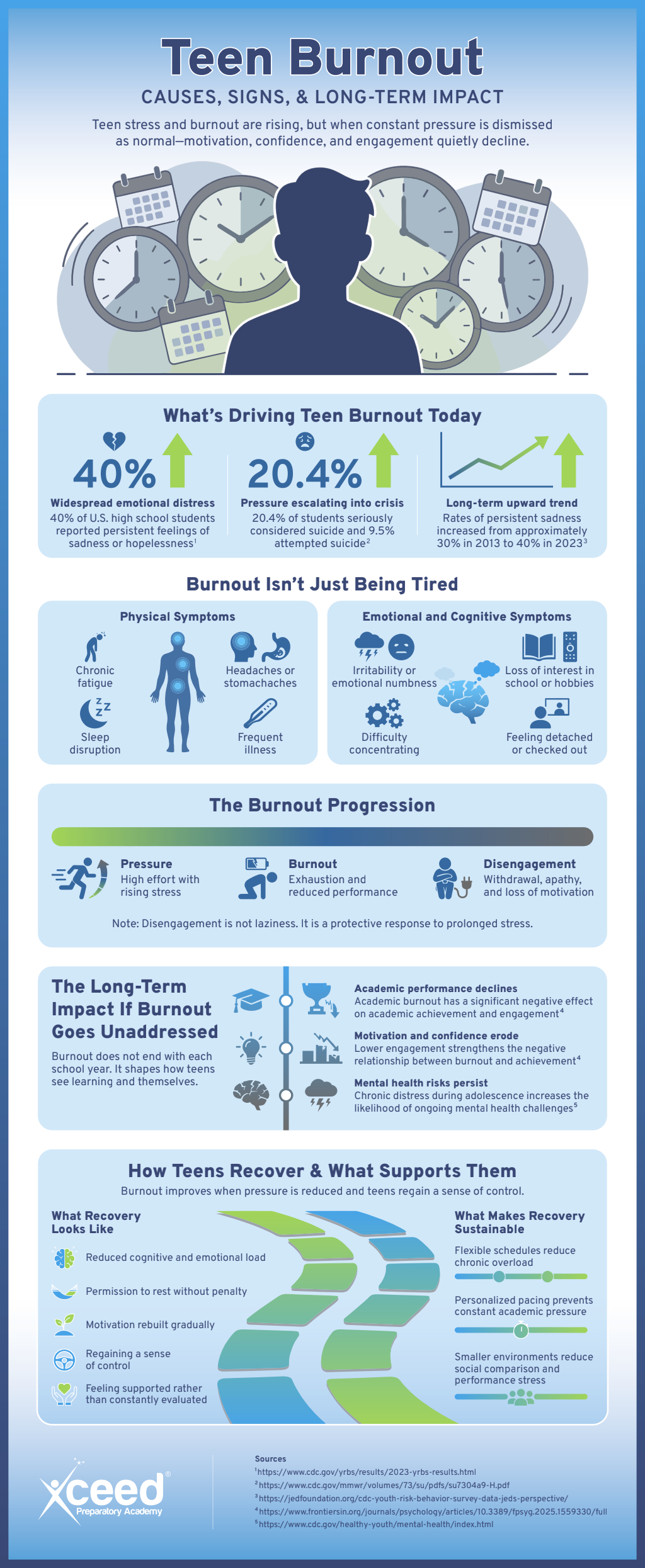
Teen burnout extends beyond periodic stress before exams or significant events. It represents a state of persistent emotional, mental, and physical fatigue resulting from continuous pressure without sufficient recovery. Adolescents encounter academic demands, social obligations, and future planning while their brains and bodies are still maturing. When these pressures are relentless, burnout can emerge, impacting long-term health.
Common Causes of Teen Burnout
One of the main contributing factors is academic pressure. High homework loads, rigorous courses, and the need to achieve high grades can create chronic stress. Students in both public and private schools often experience fierce competition and anxiety about falling behind.
Another significant factor is overscheduling. Many teens juggle school, sports practices, extracurricular activities, tutoring, and part-time jobs, leaving little time for relaxation. This packed schedule minimizes opportunities for rest and reflection, leading to accumulated stress.
Social expectations further complicate matters. Social media can intensify feelings of comparison and anxiety regarding performance. Teens may feel obligated to maintain a perfect online persona while navigating the complexities of peer relationships both online and offline.
Family expectations, even when well-meaning, can add additional pressure. A teen who feels that love or approval hinges on their achievements may push themselves beyond healthy limits. Over time, this relentless pursuit can sap motivation and joy.
Early Warning Signs
Burnout typically develops gradually. One of the first signs is emotional exhaustion. Teens may exhibit irritability, feelings of hopelessness, or a sense that their efforts are futile. Hobbies and activities that once provided joy may start to feel meaningless.
Physical symptoms can become apparent as well. Common issues include frequent headaches, stomach problems, and alterations in sleep patterns. Some teens may find it hard to fall asleep due to racing thoughts, while others may sleep excessively yet still feel fatigued.
Cognitive shifts may also occur. Difficulties with concentration, forgetfulness, and declining academic performance can indicate mental overload rather than a lack of ability. Withdrawal from friends or family can serve as another indicator that emotional resources are running low.
Long-Term Impact on Health and Development
If burnout goes unaddressed, it can significantly affect a teen’s mental health in the long run. Chronic stress in adolescence has been associated with increased risks of anxiety and depression in young adulthood. Prolonged activation of the stress response system can interfere with mood regulation and resilience.
Motivation may decline as well. Teens who connect effort with exhaustion might become disengaged from school or lose sight of future goals. This pattern can persist into college and the workforce, hindering personal growth and fulfillment.
There are also potential physical health ramifications. Extended stress can disrupt sleep patterns, weaken the immune system, and lead to unhealthy coping mechanisms such as overeating or substance use. These habits may continue into adulthood, affecting overall health outcomes.
Teen burnout signifies a disparity between demands and the ability to recover. Early detection enables families, educators, and health professionals to adjust schedules, provide emotional support, and set realistic expectations. Promoting consistent sleep, physical activity, and open communication can help restore equilibrium. Addressing burnout during adolescence paves the way for better mental health, healthier coping strategies, and improved long-term well-being.
For further insights on teen burnout, please refer to the resource linked below.