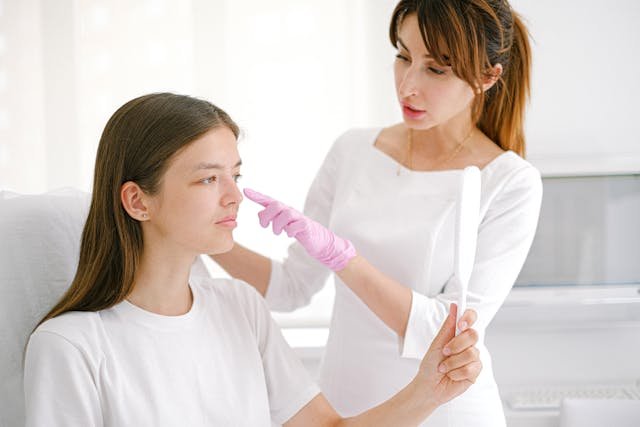
Taking charge of your health can be as straightforward yet impactful as performing regular skin checks. With over 40 years of combined experience, we, as dermatologists, have witnessed the vital role early detection plays in effective treatment. Skin cancer can begin as a subtle, easily overlooked change but, if caught early, the five-year survival rate for melanoma stands at around 99%. You don’t have to wait until something feels “off” to act. In this article, we will illustrate the importance of checking your skin both at home and with a professional—this could be one of the most significant steps you take for your health.
The Importance of Regular Skin Checks
Identifying skin cancer in its early stages is crucial as it can significantly enhance treatment outcomes and even save lives. For instance, when melanoma is detected promptly, the five-year survival rate is nearly 99%. Unfortunately, this statistic declines sharply with delayed diagnoses. This is why regular skin checks, conducted both at home and by dermatologists, are more than just a beneficial routine; they represent a critical approach to prevention. By familiarizing yourself with your skin and monitoring any changes, you’re actively contributing to your long-term health. It’s a small, proactive measure that can lead to life-saving results.
Who Should Consider Regular Skin Checks?
Anyone can develop skin cancer, but certain risk factors may increase your likelihood. These include having lighter skin, a history of sunburn, multiple moles, or a personal or family history of skin cancer, as well as frequent unprotected sun exposure. However, even if you do not have obvious risk factors, regular skin examinations can be beneficial for everyone. Skin cancer can impact individuals of all ages, skin types, and lifestyles. Therefore, we recommend incorporating skin checks into your preventive care routine, regardless of your background. If it’s time for your check-up or if you seek professional guidance, consider scheduling an appointment with a reliable provider like the Gregory Street Skin Cancer Clinic. Knowing your skin and routinely checking it is one of the most empowering actions you can take for your long-term health.
Recognizing the ABCDEs of Skin Cancer
Understanding what to look for can enable you to detect skin cancer in its early, more treatable stages. Dermatologists follow the ABCDEs of melanoma to help identify suspicious moles or spots:
- Asymmetry: If one half of the mole doesn’t match the other.
- Border: The edges are irregular, blurred, or notched.
- Color: Uneven coloration or multiple shades (brown, black, red, etc.).
- Diameter: Any mole larger than 6mm (approximately the size of a pencil eraser).
- Evolving: Any change in size, shape, color, or texture.
If you notice any of these indicators or a spot that simply seems or feels unusual, it’s time to schedule a professional skin check. Early intervention can be crucial.
Why You Should Have a Professional Skin Check
While self-exams are an excellent starting point, consulting a professional offers expertise that is hard to replicate at home. During a dermatologist’s exam, your entire body—from scalp to soles—is meticulously examined for unusual moles, spots, or growths. Utilizing specialized tools like dermatoscopes, dermatologists can identify subtle changes that are invisible to the naked eye. The examination is quick and painless, typically only taking about 10 to 15 minutes. Even if nothing appears concerning, having a professional establish a baseline for your skin can be invaluable over time. Together, self-exams and annual professional checks create a robust framework for early detection and reassurance.
Preparing for Your Skin Check
Getting ready for a skin check is straightforward, and a few simple steps can make your visit more efficient and effective. On the day of your appointment, refrain from wearing makeup, nail polish, or heavy lotions to ensure your skin is fully visible. Choose loose, easily removable clothing since your dermatologist will examine your entire body, including areas you might overlook, like your scalp, back, or feet. Bring a list of any spots you’ve observed changing, itching, or bleeding. If it’s your first visit, it is also useful to share your family history of skin cancer. A little preparation can maximize the benefits of your appointment, giving you confidence and clarity.
Taking the Next Step Could Save Your Life
Don’t wait for warning signs to prioritize your health. A quick, professional skin check could detect any issues early and provide you with peace of mind. Schedule your appointment today—your future self will thank you.